
Services
Landscaping in Seattle, Kent & South King County
Quick answer
Blue Landscaping Services handles fencing, scheduled lawn maintenance, planting design and sod installation throughout South King County. Planting plans use USDA zone 8b material that survives wet winters and dry Augusts here, and lawn installs start with grading and soil amendment rather than sod laid over compacted subgrade.
Nearly every planting job that fails around here failed for one reason: somebody picked a plant for how it looked at the nursery, not for whether it can sit with wet roots all winter. Zone 8b sounds generous because our winters are mild. Heavy clay plus months of rain plus a genuinely dry August is a much narrower window than the map suggests.
So we plant what actually lives through it. Sword fern, salal, evergreen huckleberry, vine maple, hydrangea, hebe, carex, red twig dogwood, rhododendron, dwarf conifers. Once established they mostly look after themselves. That is not settling for less. That is what a yard looks like in year five when nothing had to be replaced.
Lawns work the same way. Roll sod over compacted construction subgrade and it looks great for a month, then thins out, because the roots have nowhere to go. Whether a lawn takes comes down to grading, breaking up the compaction, and a real layer of amended topsoil. We do all three before any sod shows up.
Everything we build under landscaping
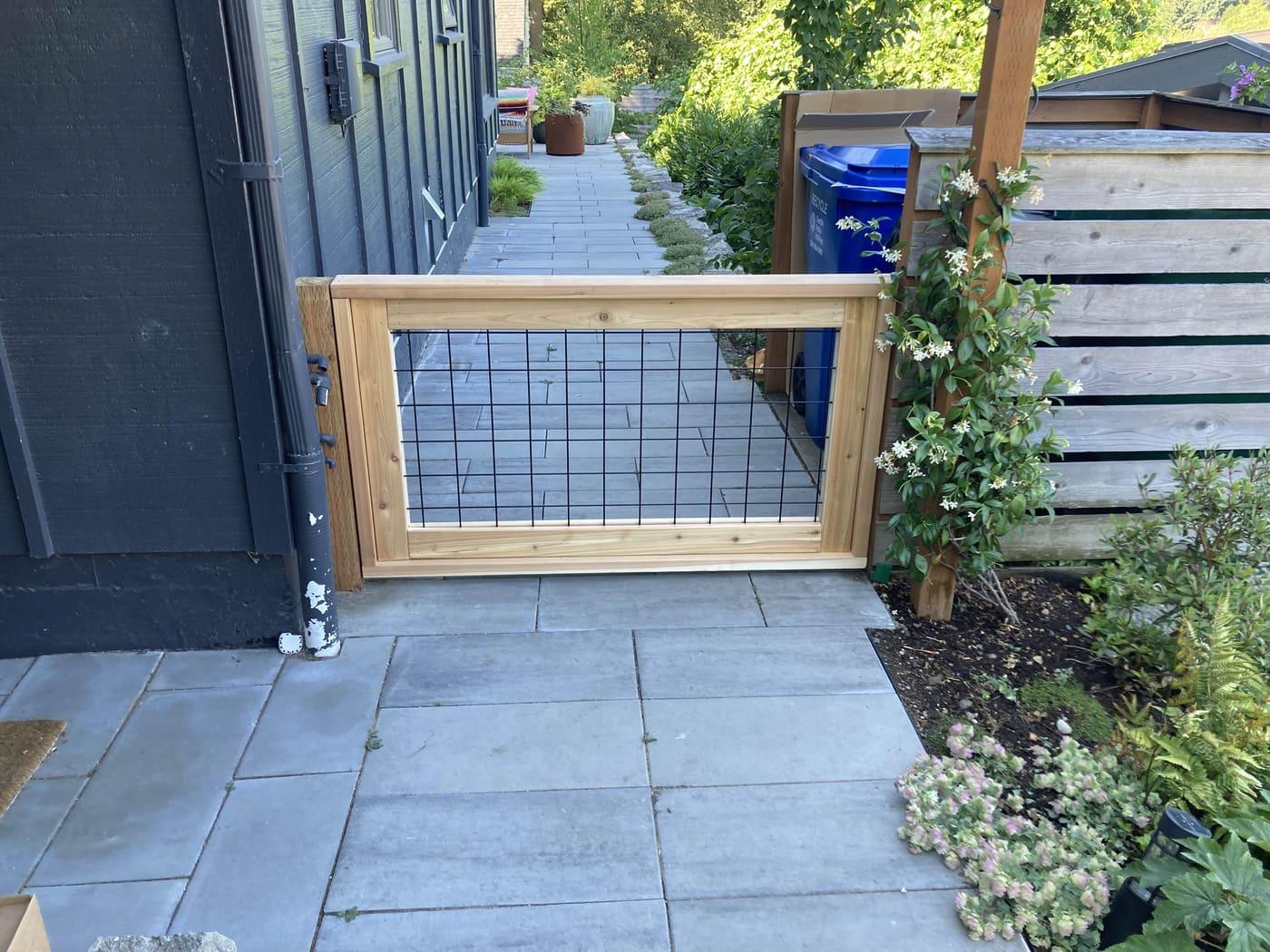
Fencing
Fence installation covers layout, post setting, framing and gates. In South King County, a 6 ft cedar privacy fence typically runs $42 to $70 per linear foot installed, and horizontal cedar with steel posts runs higher
Details & cost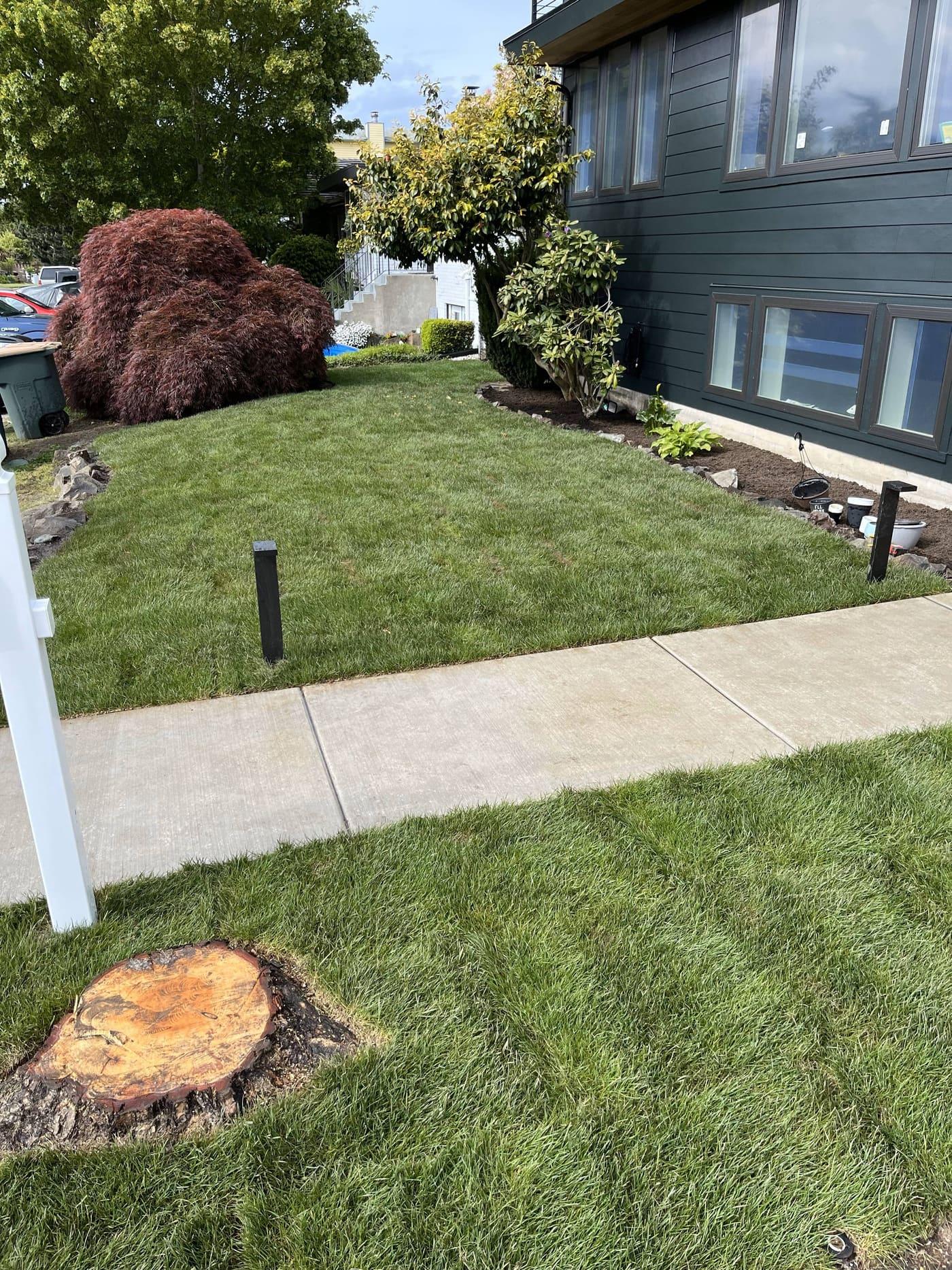
Lawn Maintenance
Lawn maintenance is scheduled mowing, edging, blowing, bed weeding and seasonal pruning on a set route. Around Kent and South King County, weekly visits on a typical suburban lot run $60 to $95 each, and most lawns here need cutting from March through November plus occasional winter mows during mild stretches.
Details & cost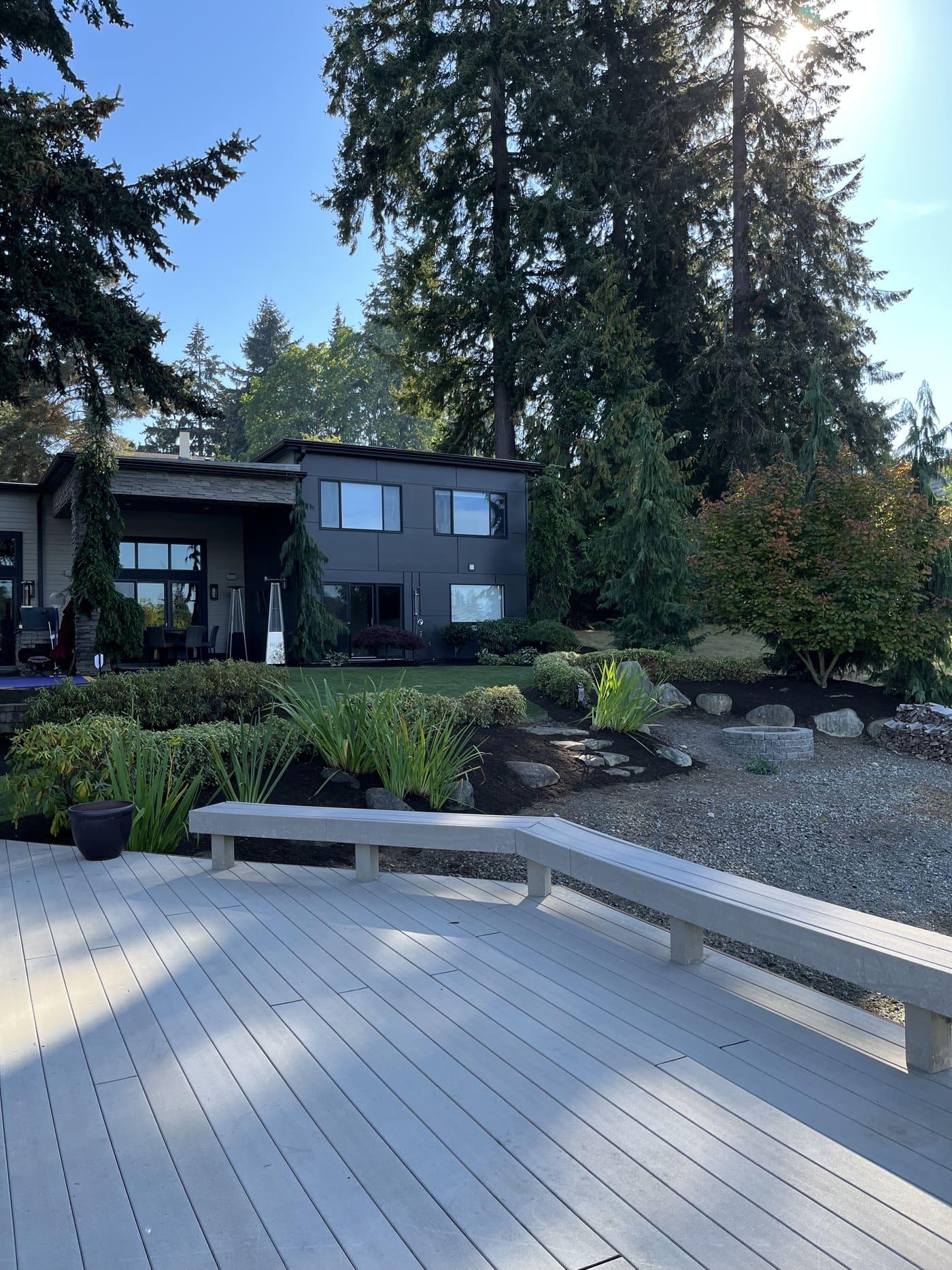
Planting & Design
Planting design is a drawn plan and installed plant palette matched to Zone 8b conditions: wet winters, dry Augusts and till subsoil. We draw the plan, then prep beds, plant and mulch
Details & cost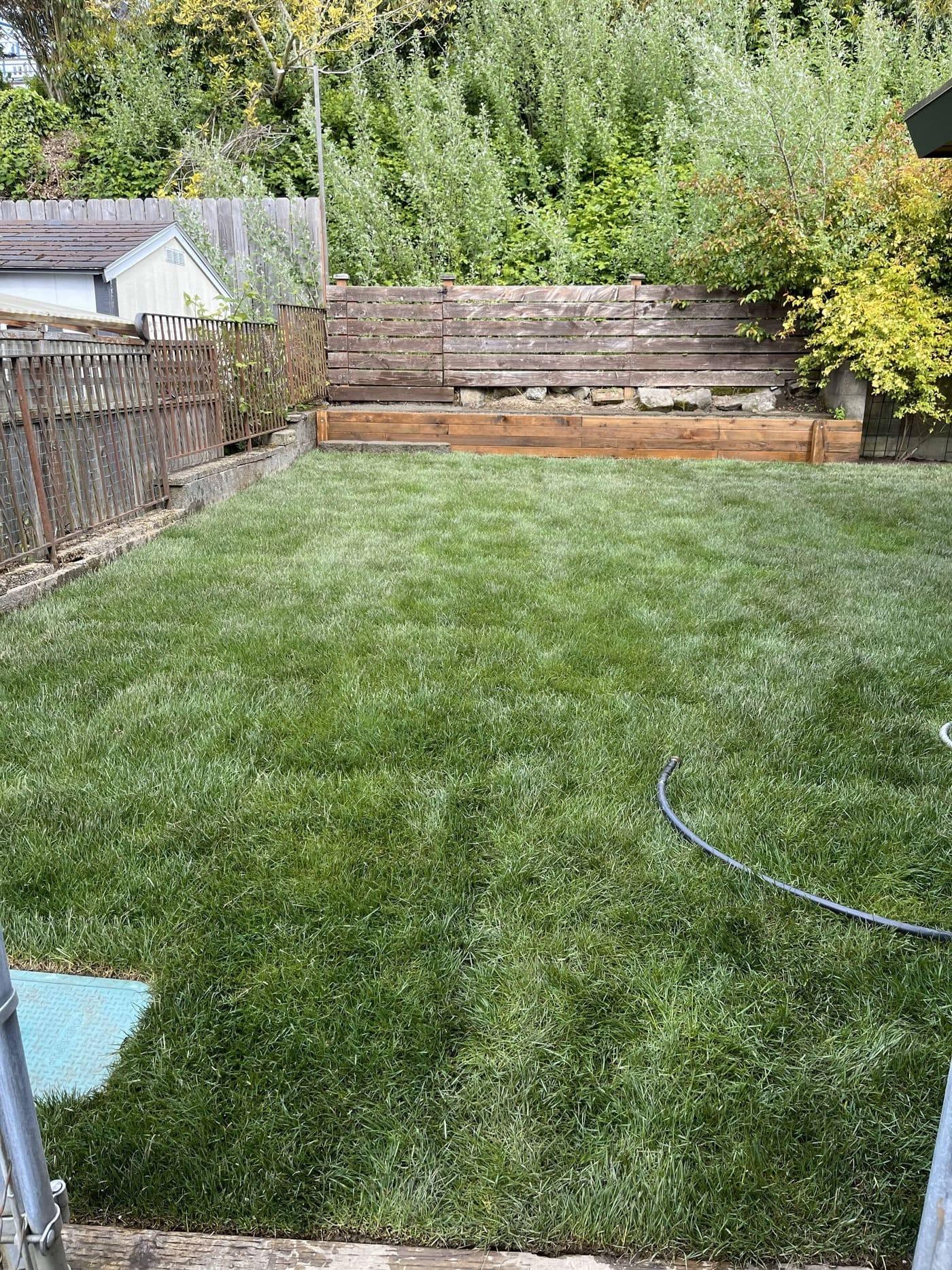
Sod Installation
Sod installation replaces a lawn with mature turf instead of seed: old turf comes out, the subgrade gets repaired, four to six inches of amended topsoil goes down, and the sod is laid within a day of harvest. Installed cost across Puget Sound typically runs $2.20 to $4.00 per square foot over prepared soil.
Details & cost
Landscaping: common questions
What plants actually survive in the Puget Sound region?
Sword fern, salal, evergreen huckleberry, kinnikinnick, vine maple, Japanese maple, hydrangea, hebe, carex, red twig dogwood, rhododendron, lavender and the dwarf conifers all handle our wet winters and dry late summers well. Anything that objects to sitting in damp soil from November through April is a poor bet regardless of its hardiness rating.
When is the best time to install sod in Western Washington?
Spring and early fall. Both give warm enough soil to root and enough natural moisture to establish without heroic watering. Mid-summer installs work but need daily irrigation for the first two to three weeks. Sod laid in the depth of winter roots slowly and is vulnerable to standing water.
Do you offer ongoing lawn maintenance?
Yes — scheduled mowing, edging, pruning, bed maintenance and seasonal cleanups on a recurring visit schedule. Most residential properties are a weekly or biweekly visit through the growing season, dropping to monthly over winter.
What kind of fencing do you install?
Cedar privacy fence, horizontal cedar, black aluminum and split rail. Cedar is the regional default because it handles the moisture, and how long it lasts comes down mostly to whether the posts were set properly. We set posts in concrete below frost depth with the grade sloped away from them.