
Landscaping
Fence Installation in Kent & Greater Seattle
Quick answer
Fence installation covers layout, post setting, framing and gates. In South King County, a 6 ft cedar privacy fence typically runs $42 to $70 per linear foot installed, and horizontal cedar with steel posts runs higher. Most cities exempt fences 6 ft and under from a building permit, though front yards are usually capped near 4 ft.
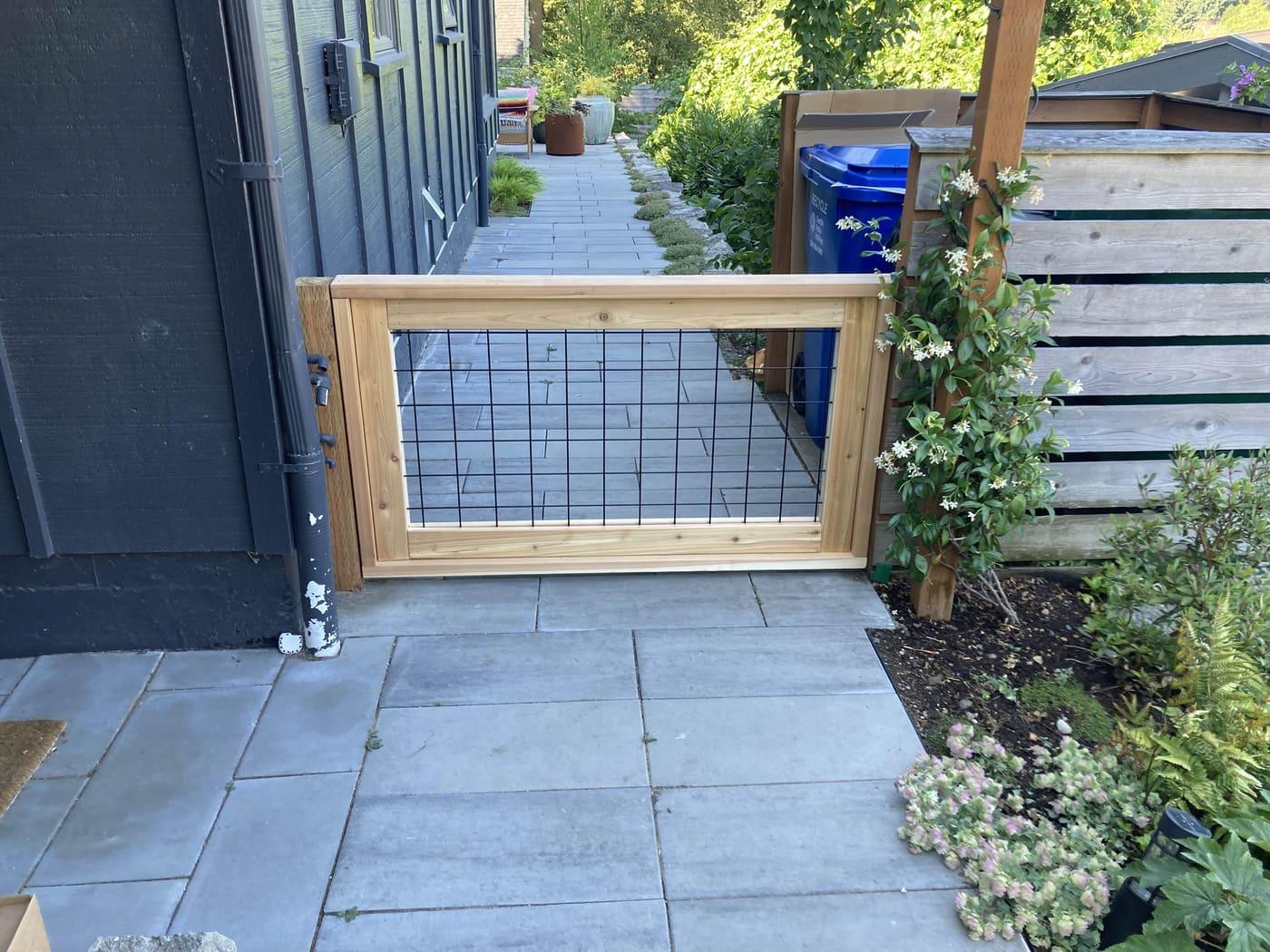
Most fence calls we get in Kent start with a post that snapped off at the dirt line. The boards still look fine, the rails are sound, and the whole run is leaning forty degrees because the bottom eight inches of a 4x4 rotted through. That is the fence problem in this climate. Cedar above grade lasts decades here. Cedar sitting in saturated soil five months a year does not, which is why how a post goes in the ground matters more than what the pickets look like.
Four styles cover almost everything we build. Standard 6 ft cedar privacy, either dog-ear or flat-top with a cap and trim, is the workhorse for suburban back yards. Horizontal cedar reads modern and photographs well, but it needs stouter posts at tighter spacing because there is no vertical picket stiffening the run. Ornamental aluminum goes where you want a boundary without losing a view, typically around a pool or a front slope. Split rail with wire backing handles acreage in Maple Valley and Covington cheaply.
Ground here rarely cooperates. Half a run will hit dense glacial till that takes a two-man auger and a rock bar, and the other half drops into soft valley silt that will not hold a post plumb without a wider hole and a proper collar. Slopes get either stepped or racked, and that decision changes the material list, so we walk the line and mark it with you before anything is ordered. Nothing gets handed to a sub. The same crew that sets the posts hangs the gates.
Then there is the neighbor conversation, which is more than half of the fence jobs that go sideways in this county. We build inside your line unless you and the neighbor have agreed otherwise in writing, we tell you plainly when we think a survey pin should be found first, and we do not guess at a boundary because an old fence used to sit there. An existing fence is evidence of nothing. Getting that settled up front is cheaper than moving eighteen posts later.
What’s included
- Line walk and layout with flags or paint, including a review of where the actual property line is believed to run
- Public utility locate through 811 and hand-digging near any marked gas, power or irrigation line
- Demolition of the existing fence, including post and footing extraction, with haul-off and disposal
- Post holes dug to depth with an auger, bell-bottomed where soil is soft, and drain rock under each post
- Posts set plumb in high-strength concrete with a crowned collar so water sheds away from the wood
- Rail and picket framing with hot-dip galvanized or stainless fasteners, string-lined for a straight top
- Gate builds on welded or braced frames with self-closing hinges and adjustable tension hardware
- Post caps, top cap and trim detail, plus a cut and dressed bottom line that follows the grade cleanly
- Site cleanup with a magnet sweep for dropped fasteners and removal of all spoils from the post holes
Materials we use
- Western red cedar pickets and rails in select tight-knot and No. 1 grades from Puget Sound mills
- Pressure-treated ground-contact 4x4 and 6x6 posts, or cedar posts sleeved over a treated base
- Postmaster and Postmaster+ galvanized steel posts for horizontal runs and long picket spans
- Ameristar Montage and Fortress Athens powder-coated aluminum panel systems
- Trex Seclusions composite fence for buyers who want zero staining and a longer warranty
- Simpson Strong-Tie fence brackets, gate hardware and hot-dip galvanized structural screws
- High-strength bagged concrete and clean 5/8 minus drain rock for post footings
- Penofin and Messmers UV Plus penetrating oil finishes formulated for western red cedar
How the build runs
- Step 1
Walk the line and settle the boundary
We stretch a string down the intended run, mark corners and gate openings, and look for survey pins at the property corners. If the pins cannot be found and the line is contested or tight to a structure, we say so and recommend a survey before we dig. Fence height limits and the sight triangle at driveways get checked against your city code at this stage, not after.
- Step 2
Locate utilities and pull the old fence
A free 811 locate goes in and we wait out the ticket. Marked lines get hand-dug. Old fence comes out next, and the concrete footings come with it, because setting a new post in the void beside an abandoned footing is how a run ends up wavy. Debris is loaded and hauled the same day so your yard is not a staging pile for a week.
- Step 3
Dig and set the posts
Holes run roughly a third of the post height below grade, deeper on gate posts and on any run catching wind off open ground. Four inches of drain rock goes in the bottom so the post end is not standing in a concrete bathtub. Each post is braced plumb, poured, and the concrete collar is crowned above grade so rain runs off instead of pooling at the wood.
- Step 4
Frame the rails
Concrete gets a day. Then rails go on, string-lined top and bottom, with the run stepped or racked to match the grade you chose during layout. Three rails is standard on a 6 ft fence and we add a fourth on horizontal builds and on anything over 6 ft. Rail joints land on posts, never mid-span, and every cut end gets sealed on treated lumber.
- Step 5
Hang boards and build the gates
Pickets go up tight or with a deliberate reveal, spaced with a gauge block rather than by eye, and the bottom line is cut to follow grade with a consistent gap so the boards stay out of the mud. Gates are the part that fails first, so ours get diagonal bracing or a welded steel frame, heavy hinges, and enough clearance to swing over winter heave.
- Step 6
Cap, clean and finish
Post caps and a top cap go on last, which is what makes a cedar fence look built rather than assembled. We sweep the site with a magnet, haul the spoils, and walk the finished run with you. If you want the fence stained, we let new cedar dry out for a few months first, then come back and apply a penetrating oil.
A straight 100 to 150 linear foot cedar privacy fence with one gate is typically 2 to 3 crew days, including a day for the post concrete to set; add a day for tear-out of an old fence, and figure 4 to 6 days for a full perimeter over 300 feet or any run on steep or heavily rooted ground.
What it costs
Real installed ranges for the Puget Sound market, published so you can plan before anyone visits.
| Item | Typical range | Unit |
|---|---|---|
| 6 ft cedar privacy fence, dog-ear or flat-topHigher end reflects cedar posts, top cap and trim detail | $42-$70 | per linear foot |
| Horizontal cedar fence on steel or 6x6 posts | $75-$130 | per linear foot |
| Split rail with welded wire backing | $24-$42 | per linear foot |
| Ornamental aluminum panel fence, 4 to 6 ft | $58-$105 | per linear foot |
| Single walk gate, braced cedar or steel frameDriven by width, frame type and hardware | $550-$1,500 | each |
| Existing fence removal, footings out and hauled | $7-$14 | per linear foot |
These are typical installed ranges for the Puget Sound market in 2026 rather than a quote, because hole conditions, slope, access for materials and how much old fence has to come out move the per-foot number substantially, and we confirm all of it during a site walkthrough.
Building this in the Pacific Northwest
Rot happens at the soil line, not underground
Wood fails in the two-inch band right at grade where oxygen and water meet. A footing that traps a puddle around the post base accelerates it badly, and in Kent valley soils that stay saturated from November into April, an untreated cedar post set flush in a flat concrete collar can be soft in seven or eight years. We crown every collar, bed the post end on drain rock, keep the bottom board off the dirt, and use ground-contact treated or steel posts where the run sits low.
Till on one end, silt on the other
Post holes on the Kent East Hill, in Renton Highlands and across much of Covington hit Alderwood series soil over cemented glacial till, which drills slow and dulls auger teeth but grips a post permanently. Down on the valley floor and along the Green River you get deep silt and old fill, which augers fast and holds nothing. Soft ground gets a wider, deeper, bell-bottomed hole and more concrete. We price a run by what the soil is likely to do, then adjust once the first few holes tell us.
Wind and winter movement, not frost heave
Frost depth around Puget Sound is shallow enough that classic frost heave is rarely what pushes a fence out of plumb. What does it here is a saturated soil column losing bearing strength under a solid 6 ft privacy panel acting as a sail during a December southwester. Exposed runs on a ridge in Federal Way or above a greenbelt get deeper posts, tighter post spacing, and sometimes a deliberate gap detail so wind passes through instead of levering the run over.
Height limits, sight triangles and easements
Most South King County jurisdictions allow fences up to 6 ft in side and rear yards without a building permit, cap front-yard fences near 4 ft, and require a clear sight triangle at driveways and street corners. Taller fences, retaining-wall-plus-fence combinations and anything inside a critical area buffer or a utility easement usually do need review. Rules differ city by city, so we read the current code for your parcel before ordering material rather than assuming Kent and Renton match.
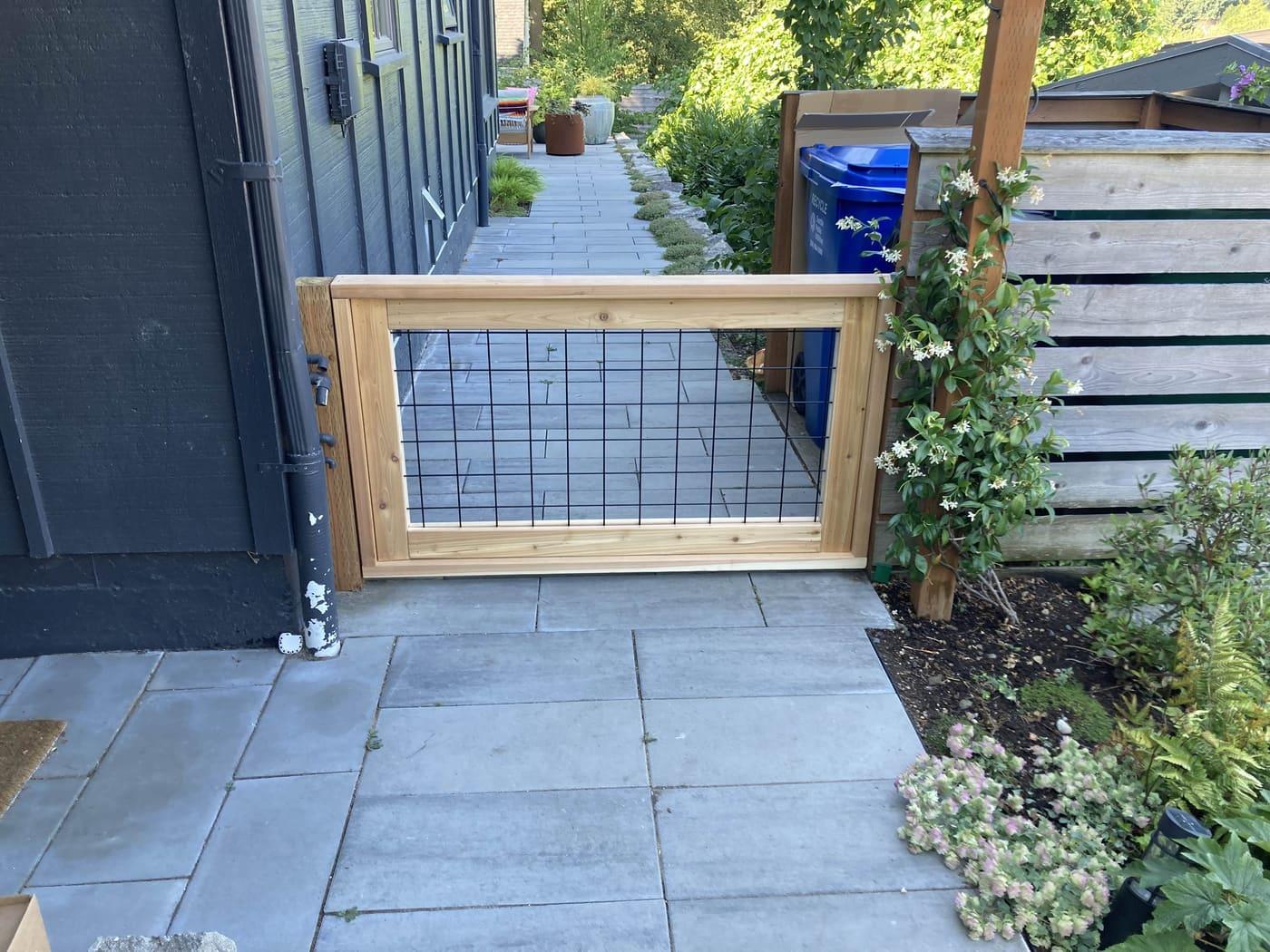
Fencing we have built
Recent fencing projects
Fencing: common questions
How long does a cedar fence actually last in western Washington?
The above-grade cedar generally gives you 20 years or more; the posts decide the real lifespan. Treated ground-contact or steel posts set on drain rock with a crowned collar commonly reach 25 to 30 years. Untreated cedar posts set flat in concrete in wet valley soil can start going soft around year eight. Almost every fence we replace failed at the post, not the pickets.
Do I need a permit to build a fence in Kent or Renton?
Usually not for a standard residential fence. Most cities in South King County exempt fences 6 ft and under in side and rear yards from a building permit, with front-yard height limited to roughly 4 ft and a sight triangle kept clear at driveways. You do need review for taller fences, fences on top of retaining walls, and anything inside a wetland or stream buffer. We verify the current code for your address before we start.
How deep should fence posts go here?
Our rule of thumb is a third of the total post length below grade, so a 6 ft fence generally gets posts about 30 inches deep, and gate and corner posts go deeper. Depth is not the whole story though. Hole diameter, drain rock under the post end, and a concrete collar crowned to shed water matter just as much in soil that stays wet for months.
Cedar, aluminum or composite?
Cedar is the best value and looks right against a Northwest garden, but it moves, checks and eventually greys unless you oil it. Aluminum is essentially maintenance free and never blocks a view, which is why it suits pool enclosures and downhill boundaries. Composite like Trex Seclusions costs roughly double cedar up front and needs nothing afterward. Budget and how much you dislike ladder work usually decide it.
Whose side of the fence gets the good face?
There is no state law dictating it, only convention: the finished side traditionally faces out toward the neighbor or the street, with rails on your side. Some cities apply a finished-side requirement to street frontage. Good-neighbor styles alternate boards so both sides look the same, which sidesteps the argument entirely and adds only a few dollars per foot.
Can you build a fence on a slope?
Yes, two ways. Stepping holds each panel level and creates triangular gaps at the bottom, which looks crisp and suits stairstep grades. Racking follows the slope so the boards stay perpendicular to the ground and no gaps open up, which works on smooth consistent grades and is the better choice for keeping dogs in. We walk the line with you and pick before we order material.